
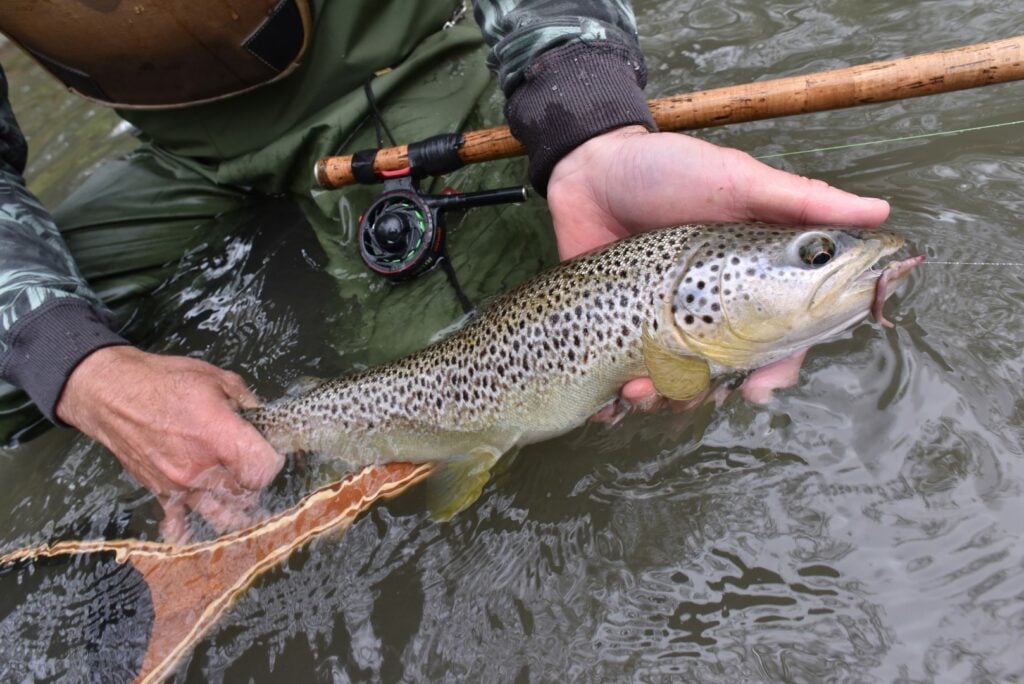
Fishing has been around since ancient times. Still, recreational fishing was only invented in modern times, with catch and release fishing the most dominant sports sector. But is this technique actually helpful for the fishes to survive?
The mortality rate of catching and releasing fish varies greatly depending on the type of fish, how it was caught and how it was handled. Fish often die after release if incorrectly caught and held.
History of Catch and Release Fishing
The first written account of fishing conducted as a recreational activity was seen in a 1496 publication by English Prioress Dame Juliana Berners. The book A Treatyse of Fysshynge wyth an Angle discusses the non-consumptive aspect of fishing, describing it as a reflective activity that may help men become more healthy both in mind and body.
The publication also discusses the notion of catching and releasing the fish, though not utilizing the terminology. It stated that nor should a man carry his amusement to excess and catch too much at once. Berners also describes trout and grayling as gamefish in their time.
The sport was introduced to the mainstream population some 150 years after Berners’ publication. In 1653, Sir Izaak Walton published The Compleat Angler. The book completely changed how fishing was viewed as a sport and included an etiquette guideline for anglers to enjoy the sport. The book’s influence is still seen in today’s fishing activities. (Source: Fishn Canada)
Mortality Rate of Catching and Releasing Fish Today
In today’s recreational fishing activities, most participants enjoy the idea of catching, photographing, and then releasing the fish. But recent studies showed that simply releasing the fish doesn’t guarantee that it will survive, which contradicts the practice entirely.
Though mortality rates in different fish species vary, fisheries biologists’ studies discovered interesting factors contributing to higher mortality of fish caught and released. Here are a few.
Water and Air Temperatures play a critical factor.
Some gamefish cannot cope with the sudden temperature change from cold to warm.
The duration of catching the fish.
Studies show that the longer the fisher takes to catch a fish, the more lactic acid the fish’s body generates. This may lead to their earlier death when released.
The way the fish is handled when caught.
Holding the fish vertically can cause severe damage to its internal organs. Holding the fish by its gills also causes extreme damage, contributing to the mortality rating when released.
The way the fish is returned to the water.
Studies show that gently lowering the fish back in water instead of just simply tossing them back contributed to a lower mortality rate.
(Source: Duluth News-Tribune)
Tips When Fishing
Many enthusiasts discuss in length how to properly catch and release fish when enjoying the sport as it will be beneficial to the fishes’ ecosystem and be abiding by the law. Here are a few tips to help keep the fish alive.
Use a tackle heavy enough for the fish you are catching.
Try catching the fish quickly, and one way to efficiently do it is if your tackle can swoop up the fish quickly. Too much play causes extreme exhaustion for the fish.
Dip your hands and nets in the water.
Fish slime is essential to their survival, and dry hands or gloves will remove it from their bodies. Having wet hands or nets may minimize losing the fish slime.
Be mindful of how you handle the fish.
Never hold the fish just by its mouth, and more so just by its gills. Hold the fish horizontally, with one hand near the gills and one near its belly.
(Source: Duluth News-Tribune)